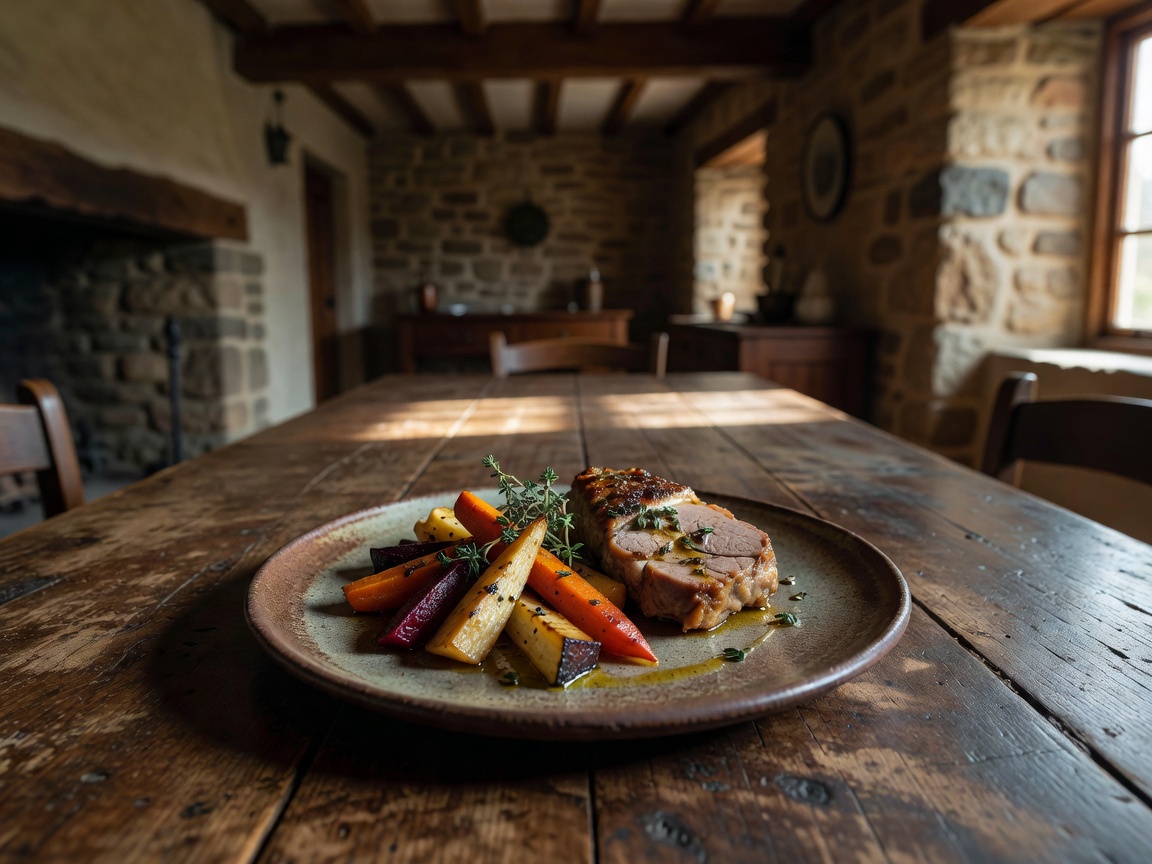
Slovenian cooking is the meeting point of four traditions: Alpine dairy and smoked meat from the north-west, Austrian and Central European baking through the middle, Hungarian-influenced pork and paprika in the Pannonian east, and Italian-Istrian olive oil, fish and pasta on the coast. The official tourist board counts 24 distinct gastronomic regions. Practically, that means a two-hour drive genuinely changes what is on the plate.
Where to eat: reading the sign above the door
The word on the front tells you almost everything:
- Gostilna — a traditional inn. Regional cooking, paper menu, house wine by the deciliter, usually the best value and the best food.
- Restavracija — a restaurant in the formal sense; anything from a hotel dining room to a tasting-menu kitchen.
- Okrepčevalnica / bife — a snack bar. Grilled meats, soup, sandwiches.
- Turistična kmetija — a tourist farm. Multi-course set meals from the farm's own produce, often the single best meal of a trip. Book in advance; many only open at weekends.
- Planinska koča — a mountain hut. Soup, žganci, sausage, strudel, and whatever the helicopter brought up.
Lunch is the main meal for Slovenes. Many gostilne run a dnevno kosilo — a soup, main and often dessert for €9–€13 on weekdays. It is the cheapest good food in the country.
The dishes to order
Žlikrofi — pinched potato dumplings from Idrija, the first Slovenian dish to receive EU Traditional Speciality Guaranteed status. Served with bakalca lamb sauce or simply with butter and breadcrumbs.
Štruklji — rolled dough parcels, boiled or baked, in dozens of versions: cottage cheese and tarragon (the classic), walnut, apple, or savoury with cracklings. Kobariški štruklji on the Soča are a walnut-filled dumpling in their own right.
Žganci — buckwheat or corn "spoonbread", crumbled and topped with cracklings or served alongside sour milk. Peasant food, now firmly fashionable.
Jota — a thick stew of sauerkraut or sour turnip, beans, potato and smoked pork, eaten from the Karst to Ljubljana. Ričet is its barley cousin.
Kranjska klobasa — Carniolan sausage, protected since 2015: 80% pork, 20% bacon, salt, pepper, garlic, nothing else. Boiled, served with mustard and grated horseradish.
Bograč — the Prekmurje goulash of three or more meats, cooked outdoors in a cauldron. Follow it with prekmurska gibanica, a layered cake of poppy seed, walnut, apple and cottage cheese.
Soča trout and Adriatic fish — marble trout grilled whole in the valley; sea bass, bream, anchovies and cuttlefish risotto on the coast.
Sweet things that matter
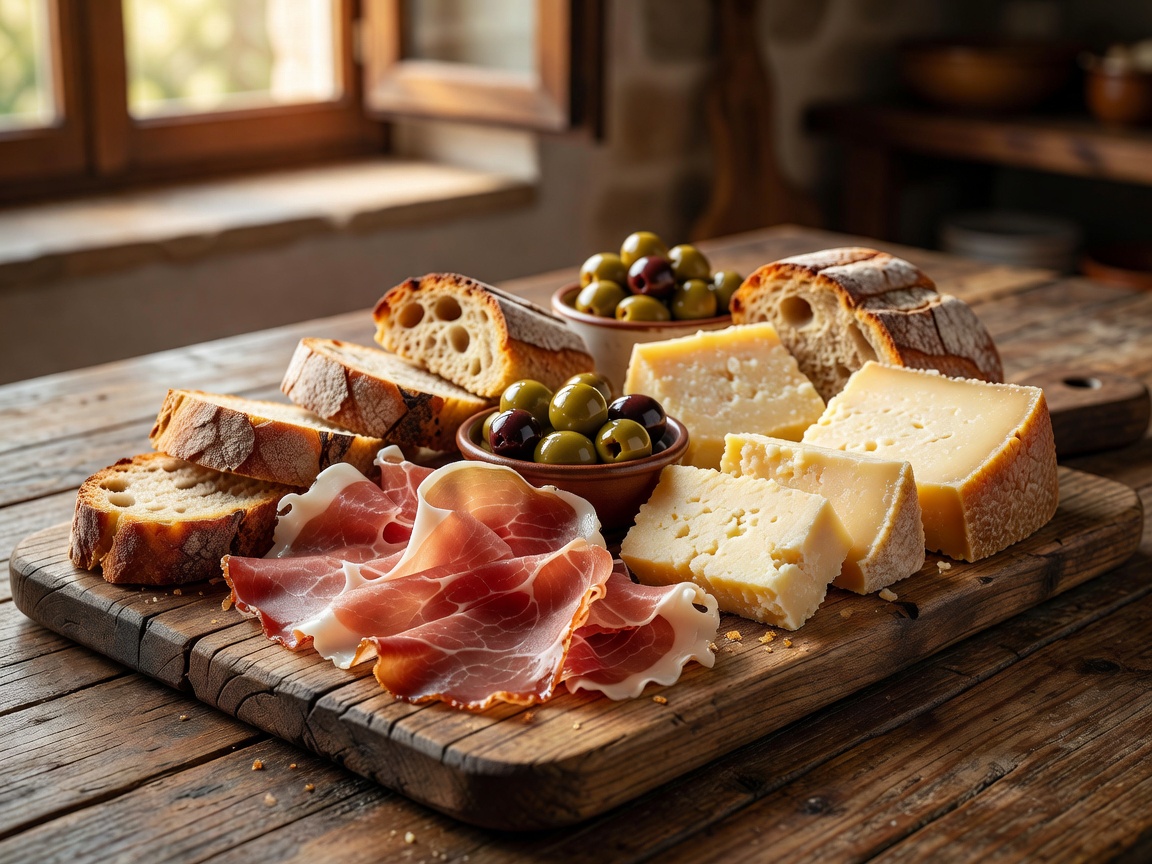
Potica is the national cake: a thin sheet of yeast dough spread with filling and rolled into a spiral, traditionally baked in a fluted ceramic potičnik. There are more than eighty documented fillings; walnut is the default, tarragon the one to seek out. Kremšnita, the Bled cream cake, is custard and whipped cream between pastry, standardised at the Park Hotel in 1953. Gibanica from Prekmurje is dense, rich and requires a walk afterwards.
Ask for the house wine by the deciliter — "dva deci belega" gets you 200 ml of white for two or three euros in a village gostilna, and it is usually made within twenty kilometres of your table.
The three wine regions
Slovenia produces roughly 70–90 million litres a year, over 70% of it white, and exports very little of it — which is why the names are unfamiliar and the quality is a surprise.
Primorska (the west, bordering Italy) is the most internationally known: the Vipava Valley, Goriška Brda, the Karst and Slovenian Istria. Whites from Rebula, Malvazija and the local Zelen and Pinela; reds from Refošk and, on the red terra rossa of the Karst, the fierce dark Teran. This is also the heartland of Slovenia's orange-wine movement, with long skin-contact macerations in amphorae.
Podravje (the north-east, around Maribor and Ljutomer-Ormož) is cooler and almost entirely white: Furmint (here called Šipon), Laški Rizling, Sauvignon and Renski Rizling, plus fine late-harvest sweet wines. The Old Vine in Maribor, at over 400 years, is the oldest fruiting grapevine in the world.
Posavje (the south-east) is the smallest and most idiosyncratic, home of cviček — a pale, low-alcohol blend of red and white grapes that tastes like nothing else and is drunk very cold.
Beyond the glass
Slovenia's beer market is dominated by two lagers, Laško and Union, but the craft scene in Ljubljana and Vipava is strong. Žganje is the general term for fruit brandy — plum, pear, honey-infused medica, and the herbal pelinkovec. Coffee culture is Austro-Italian and unhurried: ordering a coffee buys you the table for as long as you want it.
Customs worth knowing
- Greetings: dober dan (good day) on entering any shop or small restaurant. Hvala for thank you, prosim for please.
- Tipping: not obligatory. Round up, or leave 10% for genuinely good service.
- Shoes off when entering a private home. Always.
- Sunday closes most shops; village gostilne often close Monday instead.
- Mountain huts operate on cash and communal tables — you sit where there is room.
- Toasting: na zdravje, eye contact, and do not cross arms with a neighbour.
The cultural calendar
February brings Kurentovanje in Ptuj, a UNESCO-listed carnival of sheepskin-clad Kurenti driving out winter with cowbells. Summer is festival season: the Ljubljana Festival, the Lent Festival in Maribor, and two large music weeks on the Tolmin riverbanks. Late August is Kravji bal, the Cows' Ball at Bohinj, marking the return of the herds from the high pastures — a genuine agricultural event with a great deal of cheese. November 11 is St Martin's Day, when the year's must legally becomes wine and the whole country eats roast goose.