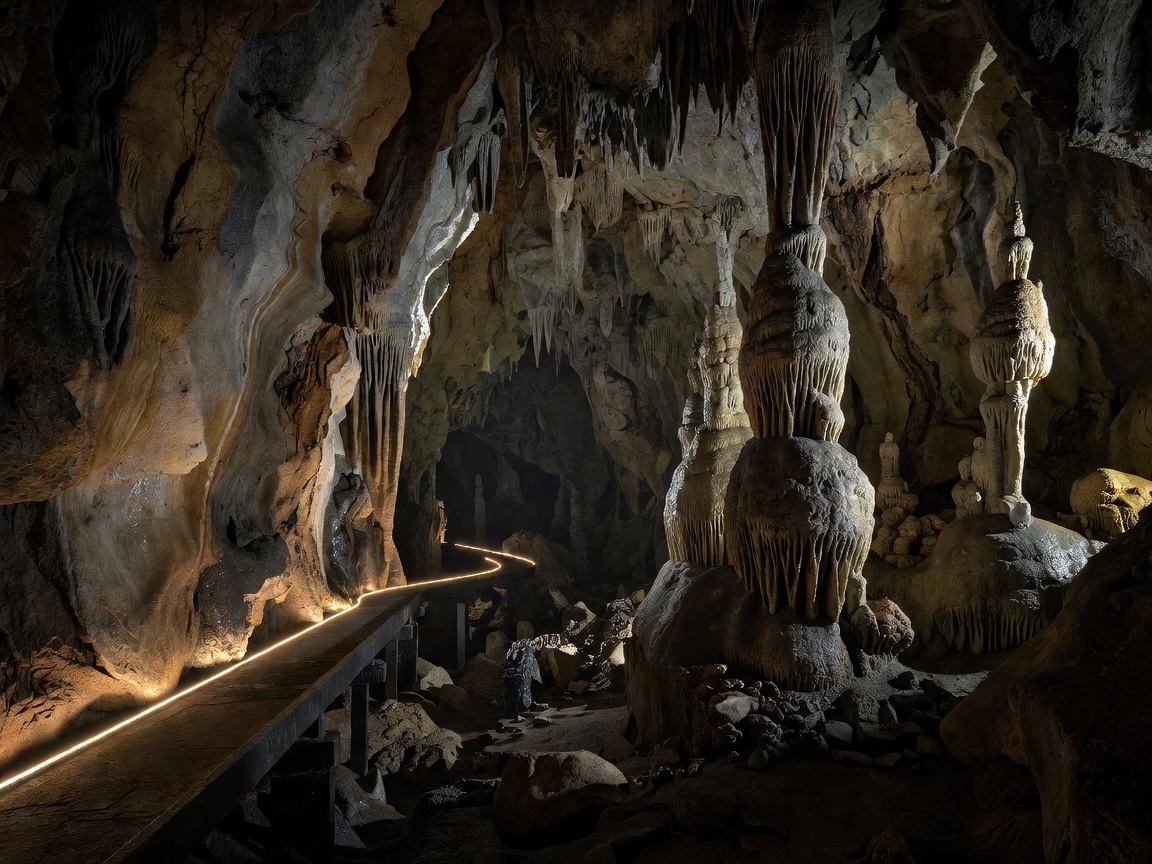
The Reka river runs for 55 kilometres across the Karst and then, at the village of Škocjan, vanishes. It drops into a limestone sinkhole and spends the next 34 kilometres underground before re-emerging in Italy as the Timavo and entering the Adriatic. What it has carved on the way is not a cave in the ordinary sense — it is a canyon with a roof, up to 146 metres deep and 120 metres wide.
Why this and not Postojna
Slovenia's other famous cave, Postojna, is bigger in visitor numbers, has an underground train and is packed with delicate stalactite formations. Škocjan has fewer formations and no train, but it has scale and sound. You walk beside and then above a living river, on paths cut into the rock, and cross the Cerkvenik Bridge — a slim span 45 metres above the water in the Hanke Channel, with the noise of the Reka filling the chamber below.
If you can only do one, do Škocjan for atmosphere and geology, Postojna for spectacle and families with small children. If you can do both, they are 30 minutes apart.
The tours
Visits are guided only and leave at fixed times, more frequently in summer. The main options are:
- Through the Underground Canyon — the classic route, roughly 1.5–2 hours, 3 km of walking, around 500 steps. Enters via the artificial tunnel, passes the Silent Cave and its dripstone formations, then the Murmuring Cave and the Hanke Channel with the bridge. Exits by funicular or on foot up through Velika dolina.
- Following the Reka River Underground — a shorter, seasonal route (usually April to October) through the lower entrance, Mahorčič and Mariničev caves, with natural bridges and the Bowls. About 2 hours.
- Through the Park to the caves — a surface educational trail through Velika and Mala dolina and the collapse valleys, doable independently.
Photography is prohibited inside on standard tours to protect the formations and to keep groups moving on narrow paths. Accept it; the memory is better than the phone image would have been.
It is 12 °C down there, all year, with high humidity and a constant draught from the river. In August you will walk in from 33 °C and be cold within ten minutes. Bring a jacket — this is the single most common mistake.
The surface park
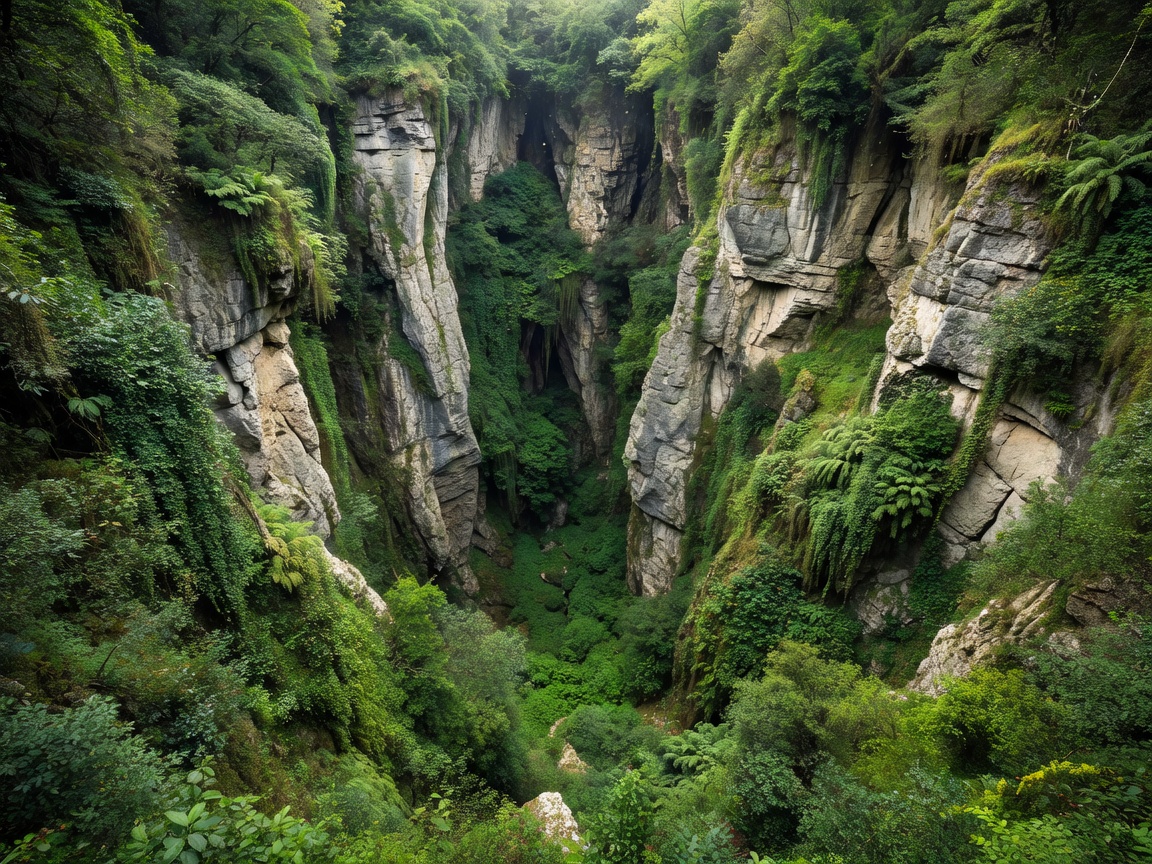
The Škocjan Caves Regional Park protects 413 hectares above ground, including the collapse dolines, the karst villages of Škocjan, Matavun and Betanja, and a network of walking trails. The circular educational path takes about 90 minutes and gives you the best views into Velika dolina and down onto the natural bridge — free, and worth doing before or after the cave tour.
There is also a small museum complex in restored karst houses covering the geology, the biospeleology (the caves host endemic invertebrates and a significant bat population), and the history of exploration, which began seriously in the 1880s with the Italian and Austrian speleological societies.
Practical visiting
The entrance is at Matavun, just off the A1 motorway at the Divača exit. Driving from Ljubljana takes about 55 minutes, from Piran about 45 minutes, from Trieste about 40. There is free parking at the visitor centre. By train, Divača station is 3 km away and there is a marked walking path, or a shuttle in the high season.
Adult tickets for the main canyon tour were around €24 in the 2025 season, with concessions for children, students and seniors. Buy at the visitor centre; in July and August arrive 30 minutes before your chosen departure. Tours run in Slovene and English simultaneously, with other languages available in high season.
Accessibility
The main route involves around 500 steps, wet stone, low sections and steep gradients. It is not suitable for wheelchairs, pushchairs or anyone with significant mobility or heart conditions. The surface park trail is much gentler but still involves uneven karst ground. The park publishes a shorter accessible option — contact them directly before travelling.
Combining with the Karst
The surrounding Karst plateau (Kras) deserves a day of its own. Lipica, 15 minutes away, is the 1580 stud farm that gave the Lipizzaner horse its name. Štanjel is a fortified hill village with a Plečnik-influenced terraced garden. And the whole region produces Teran wine from Refošk grapes grown on red terra rossa soil, plus the air-dried Karst pršut that hangs in every cellar. See our food and culture guide for more.