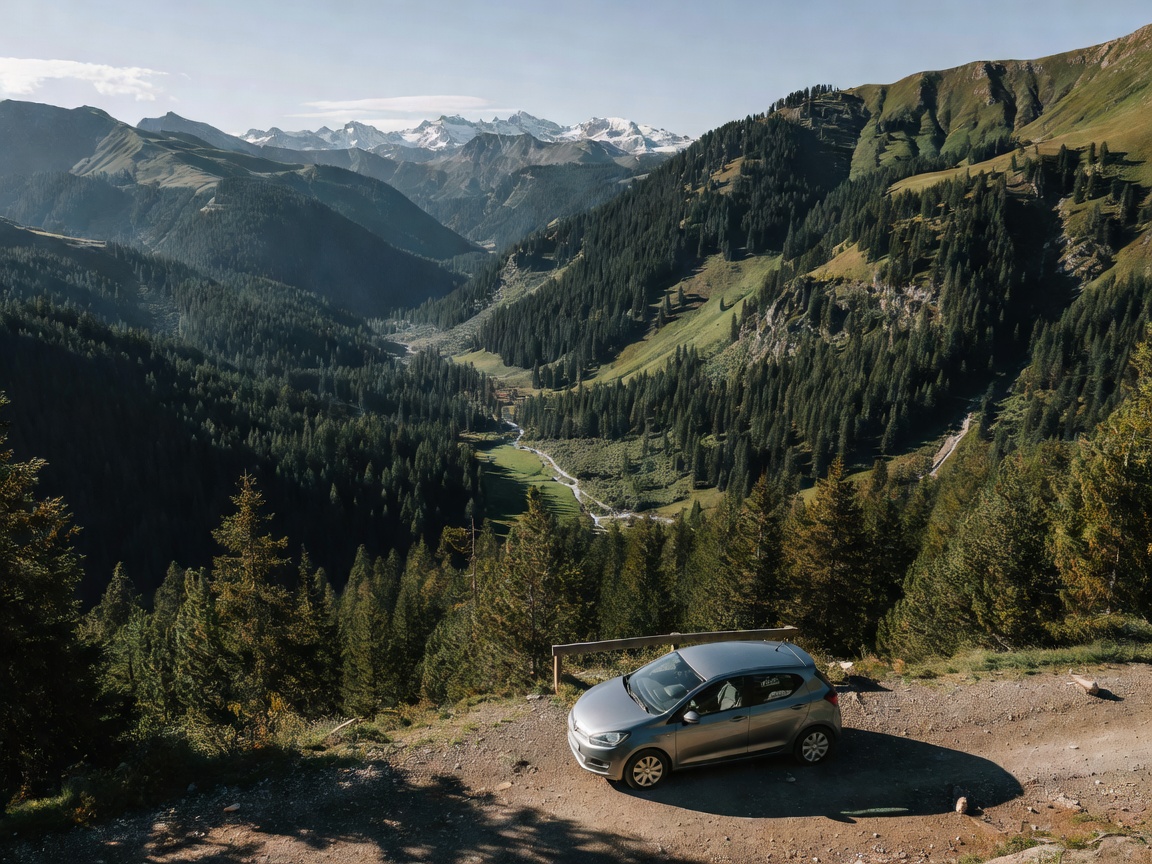
Slovenia is small, well-surfaced and easy to drive. The two things that catch visitors out are administrative rather than practical: the electronic motorway vignette, which is enforced by camera and carries a serious fine, and the winter equipment law, which applies by date rather than by weather. Get both right and the rest of the country is straightforward.
The e-vignette (vinjeta)
There are no toll booths on Slovenian motorways. Instead, every vehicle under 3.5 tonnes must hold a valid e-vignette linked to its registration plate before entering an A-road (motorway) or H-road (expressway). Enforcement is automatic number-plate recognition; the on-the-spot fine for driving without one starts at €300.
- Where to buy: online at the official DARS portal, at any petrol station in Slovenia, or at stations just across the Austrian, Italian, Hungarian and Croatian borders.
- Options for a car: weekly (approx. €16), monthly (approx. €32) or annual (approx. €118). Motorcycles are cheaper; motorhomes over 3.5 t use a different tolling system.
- Timing: the online vignette can be bought with a start date up to 30 days ahead and is valid immediately if you choose today.
- Hire cars: most Slovenian rentals already carry an annual vignette. Cars hired in Austria, Italy or Croatia usually do not — check before you cross.
You can avoid the motorway entirely on regional roads, and for the alpine routes in our itineraries you often will. But the Ljubljana–coast and Ljubljana–Bled legs are much slower without one.
Hiring a car
Rates run roughly €35–€70 per day in summer for a compact automatic, less for a manual. Points worth knowing:
- Cross-border fees. Taking the car into Croatia, Italy or Austria is normally allowed but may require a declared cross-border fee and a green card. Say so at the desk — the Predel Pass alternative to Vršič runs through Italy.
- Winter tyres are legally required from 15 November to 15 March, and at any time outside those dates if there is snow or ice on the road. Slovenian rental fleets fit them automatically; foreign-hired cars may not have them.
- Fuel is widely available on main roads but scarce in the mountains. There is no fuel station on the Vršič Pass — fill up in Kranjska Gora or Bovec.
- Parking in towns uses a blue-zone disc or a paid machine. At Bled, Bohinj and Piran, parking is paid, regulated and busy from mid-morning in summer.
Driving rules in brief
- Dipped headlights are compulsory day and night, all year.
- Speed limits: 50 km/h in built-up areas, 90 on open roads, 110 on expressways, 130 on motorways.
- Blood alcohol limit is 0.05%; zero for professional drivers and anyone licensed under two years.
- Mobile phones require a hands-free kit. Fines are issued readily.
- You must carry a reflective vest, warning triangle and spare bulbs; the vest must be inside the cabin, not the boot.
- Emergency number is 112; road assistance is 1987.
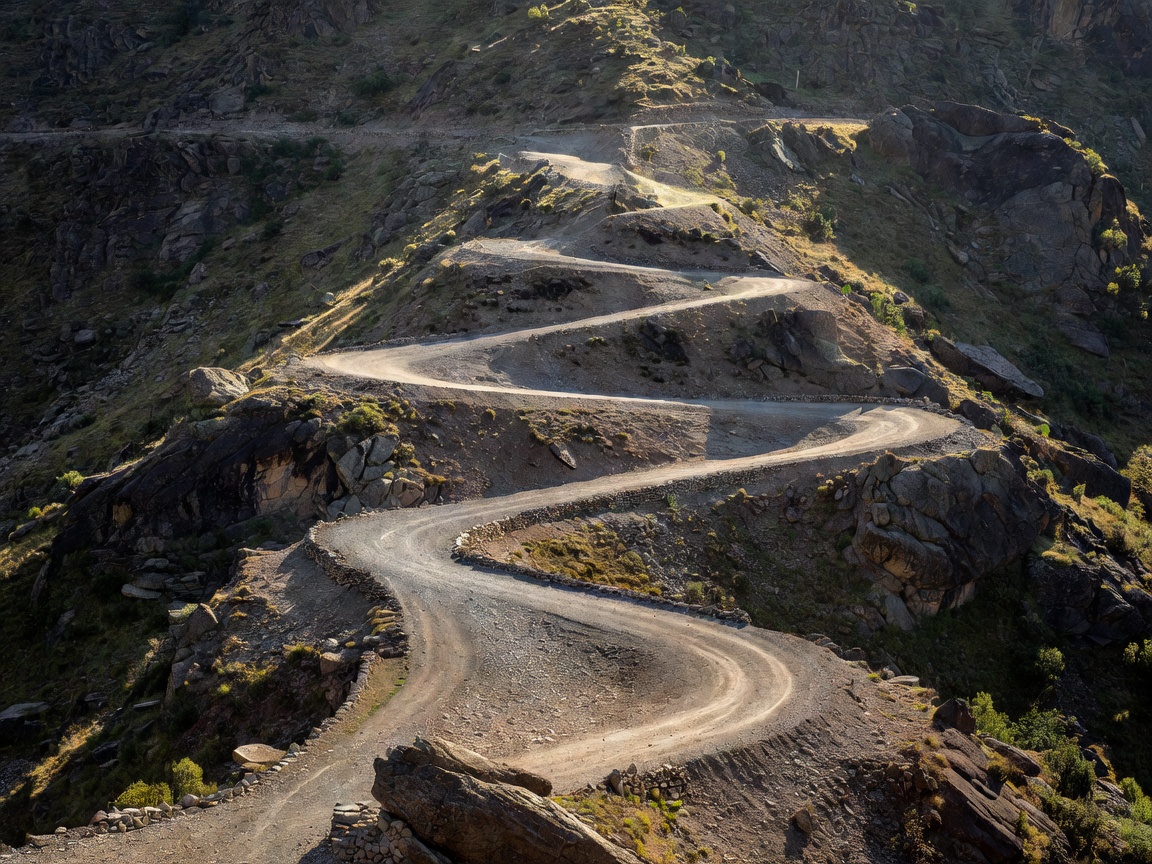
Distances here mislead. Bled to Bovec is 72 km and takes two hours over Vršič — not because the road is bad, but because you will stop eleven times. Plan by hours, never by kilometres.
Arriving by air
Ljubljana Jože Pučnik (LJU) is 26 km north of the capital and, usefully, closer to Bled than to Ljubljana itself. From the terminal: public bus 28 to the central bus station takes about 50 minutes for a few euros and runs roughly hourly; a shared shuttle is €10–€14 per person and takes 30 minutes; a taxi costs €40–€50. Car hire desks are in the terminal.
Many visitors fly into Trieste (TRS), Venice Marco Polo (VCE), Klagenfurt (KLU) or Zagreb (ZAG) instead. Trieste is 40 minutes from Piran and 1 h 40 from Ljubljana; Venice is around 2 h 30 to Ljubljana by road, with GoOpti and Flixbus running scheduled transfers.
Trains
Slovenske železnice runs a modest but pleasant network. The useful lines for visitors are Ljubljana–Jesenice (stopping at Lesce-Bled, 4 km from the lake, with a connecting bus), Ljubljana–Divača–Koper for the Karst and the coast, and Ljubljana–Maribor–Ptuj to the east. Tickets are cheap, bookable online, and bicycles are carried for a small supplement on most services.
The Bohinj railway is a destination in its own right: an Austro-Hungarian line of 1906 running from Jesenice through Bohinjska Bistrica and the 6,327 m Bohinj Tunnel to Most na Soči and Nova Gorica. The car train on this line loads vehicles onto flat wagons and carries them through the tunnel, saving a long mountain detour between the lakes and the Soča Valley. Several departures daily; turn up, pay, drive on.
Buses
Intercity buses are frequent, punctual and often faster than the train. Ljubljana–Bled and Ljubljana–Bohinj run roughly hourly in summer (75 and 110 minutes respectively). The coast is served from Ljubljana to Koper, Izola, Piran and Portorož several times a day. The Soča Valley is the weak spot: services from Ljubljana to Bovec go the long way via Idrija and Tolmin, and the direct Kranjska Gora–Bovec bus over Vršič runs only in July and August.
Local guest cards issued by accommodation in Bled, Bohinj and the Soča Valley frequently include free travel on valley buses — ask on arrival, as it is often not volunteered.
Bicycles, boats and cable cars
Ljubljana's BicikeLJ bike share covers the centre; Bled, Bohinj and Kobarid all have rental including e-bikes. The Parenzana rail-trail runs from the coast into Croatia on a converted narrow-gauge line. In summer, passenger boats link Piran with Izola, Koper, Portorož and — seasonally — Trieste and Venice. Cable cars operate at Vogel (Bohinj), Kanin (Bovec), Krvavec, Velika Planina and Ljubljana Castle's funicular; all have maintenance closures, typically in late spring and November.
Can you do it without a car?
Yes, for Ljubljana, Bled, Bohinj, the coast and Škocjan — all are reachable by public transport, and Bohinj in particular has a good summer shuttle. No, realistically, for the Soča Valley, the Vršič Pass, the high trailheads and the Karst villages. A hybrid works well: train and bus for the cities and lakes, a car hired for three days when you head west.