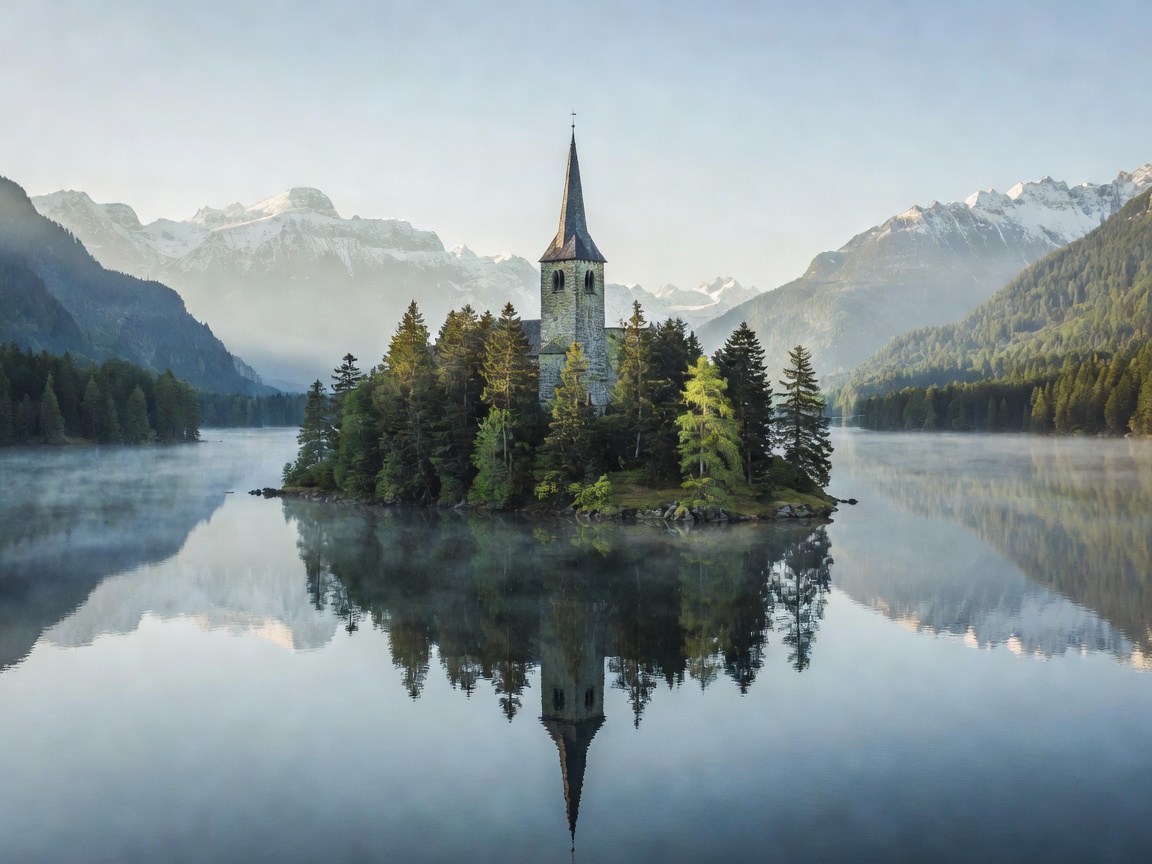
Bled is a glacial lake fed by warm thermal springs, which is why it reaches a swimmable 24 °C in July while lakes twenty kilometres away stay icy. In the middle sits Slovenia's only natural island, crowned by a Baroque church; on the northern cliff, 130 metres above the water, stands a castle first mentioned in 1011. The combination is unavoidable and unrepeatable.
The island and the pletna boats
Bled Island is reached by pletna — flat-bottomed wooden boats rowed standing up, a right passed down through 23 families of Mlino village since the 18th century. Boats leave from Mlino, from the Bled promenade below the Park Hotel, and from the campsite at the western end. The crossing takes around 15 minutes each way, with roughly 30–40 minutes on the island. Expect €18–€20 per person return in the 2026 season; boats leave when they are full (around 20 people).
From the landing stage, 99 stone steps climb to the Church of the Assumption of Mary. Inside, the wishing bell hangs on a rope from the 15th-century tower; tradition says a wish is granted if you ring it properly, which almost nobody manages first time. Church entry is a separate small fee and includes the tower and a fragment of the earlier Romanesque frescoes.
You can also row yourself — rental boats are available at Mlino and the eastern lido for roughly €25–€30 per hour for a boat that takes four. Swimming to the island is permitted but you must land at the public steps, not the church jetty, and it is a 180 m crossing from the nearest shore.
Bled Castle
The castle sits on a 130 m cliff on the north shore and is the oldest documented castle in Slovenia, granted to the Bishops of Brixen by Emperor Henry II in 1011. There is a museum of the region's history, a working printing press using a Gutenberg-style replica, a herbal gallery, a wine cellar where you can bottle and wax-seal your own, and a smithy.
Honestly, most people come for the terrace view. It is the single best overview of the island and the Karavanke range behind it. Entry is roughly €18 for adults in 2026; the walk up from the parish church takes about 20 minutes on a steep gravel path, or you can drive to the upper car park and walk five minutes.
The viewpoints that make the photograph
Three short climbs on the southern side deliver the classic elevated shot:
- Ojstrica (611 m) — 20 minutes up from the car park near the campsite. Steep, rooty, and the most popular sunrise spot. Wear grip.
- Mala Osojnica (685 m) — another 15–20 minutes beyond Ojstrica via a long metal staircase. Higher, wider, and the definitive view. Total 40 minutes from the road.
- Velika Osojnica (756 m) — a further 25 minutes; more forest than view, but almost always empty.
All three are genuine hill paths, not promenades. In wet weather the roots are treacherous. Head torches are essential for sunrise attempts.
The single best piece of advice for Bled: do the lake loop anti-clockwise starting at 07:00. You will finish at 08:30 with the light behind you, the promenade empty and every bakery just opening.
Vintgar Gorge
Four kilometres north-west of Bled, the Radovna river cuts a 1.6 km gorge through vertical limestone, followed by a wooden boardwalk built in 1893. It ends at the 16 m Šum waterfall, the highest river waterfall in Slovenia. The walkway is one-way in the high season with timed entry slots — book online in advance for July and August, as walk-up tickets routinely sell out. The gorge closes over winter, typically from late November until early April, and for repairs after storms.
Allow 90 minutes for the gorge itself. You can walk there from Bled in about an hour via Podhom, or take the seasonal shuttle bus. Sturdy shoes: the boards are wet and slick even in summer.
Beyond the obvious
Bled rewards a second day. The Radovna valley cycle route runs flat and almost car-free up into Triglav National Park. Pokljuka, a high forested plateau at 1,300 m, is 30 minutes by car and offers easy walks through spruce forest and peat bogs, plus the Pokljuka Gorge. Blejski Vintgar to Zasip loops back over farmland with views of the Karavanke. And Lake Bohinj is only 28 km away — a completely different, wilder lake.
Practicalities
Parking at Bled is paid everywhere near the water, roughly €2–€3 per hour with daily caps; the cheapest option is the large car park by the Union Hotel or the sports hall lot, both a short walk from the promenade. Buses from Ljubljana take 75–90 minutes and run hourly; the train stops at Lesce-Bled, 4 km from the lake, with a connecting bus.
And yes: eat a kremšnita, the Bled cream cake — 7 cm of custard and cream between two sheets of pastry, standardised by the Park Hotel confectionery in 1953. It is not subtle. It is obligatory.