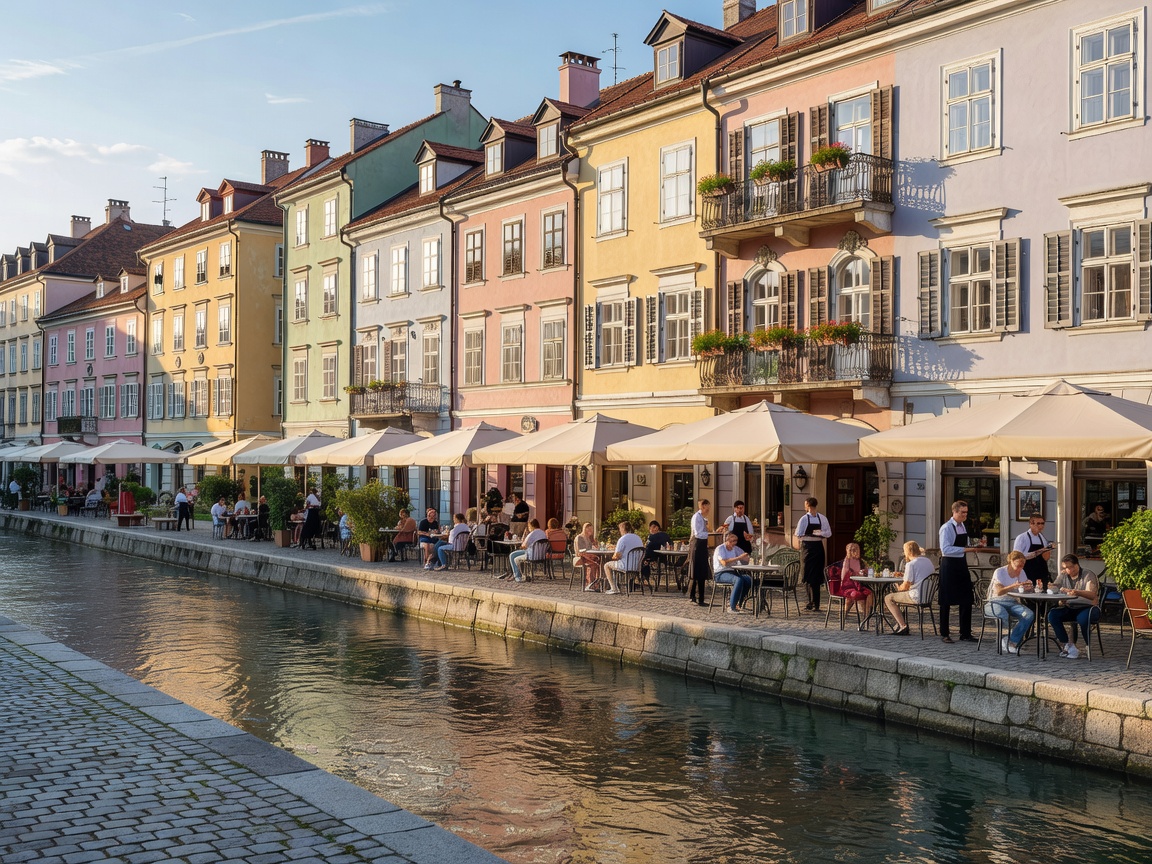
Ljubljana is the rarest kind of European capital: small enough to walk end to end in half an hour, but dense enough that you keep finding courtyards, market halls and riverside bars you missed the day before. The Ljubljanica river runs through the middle of it, lined with willows and terraces, and above it the castle sits on a wooded hill that behaves more like a city park than a fortress.
The shape of the city
Almost everything a visitor wants sits inside a 1.2 km radius. The medieval old town curves along the right bank beneath Castle Hill — Mestni trg, Stari trg and Gornji trg, three linked squares of Baroque townhouses. On the left bank is the nineteenth-century city: Prešeren Square with its pink Franciscan church, the shopping streets of Čopova and Slovenska, and the parks beyond.
Between the two runs the work of Jože Plečnik, the architect who reshaped Ljubljana between the wars and gave it its distinctive civic personality. His Triple Bridge (Tromostovje, 1932) widened a single stone crossing into three fanned spans with balustrades and poplars. His Cobblers' Bridge, Central Market colonnade, National and University Library and the Žale cemetery complex were added to the UNESCO World Heritage List in 2021 as "The Works of Jože Plečnik in Ljubljana".
Ljubljana Castle
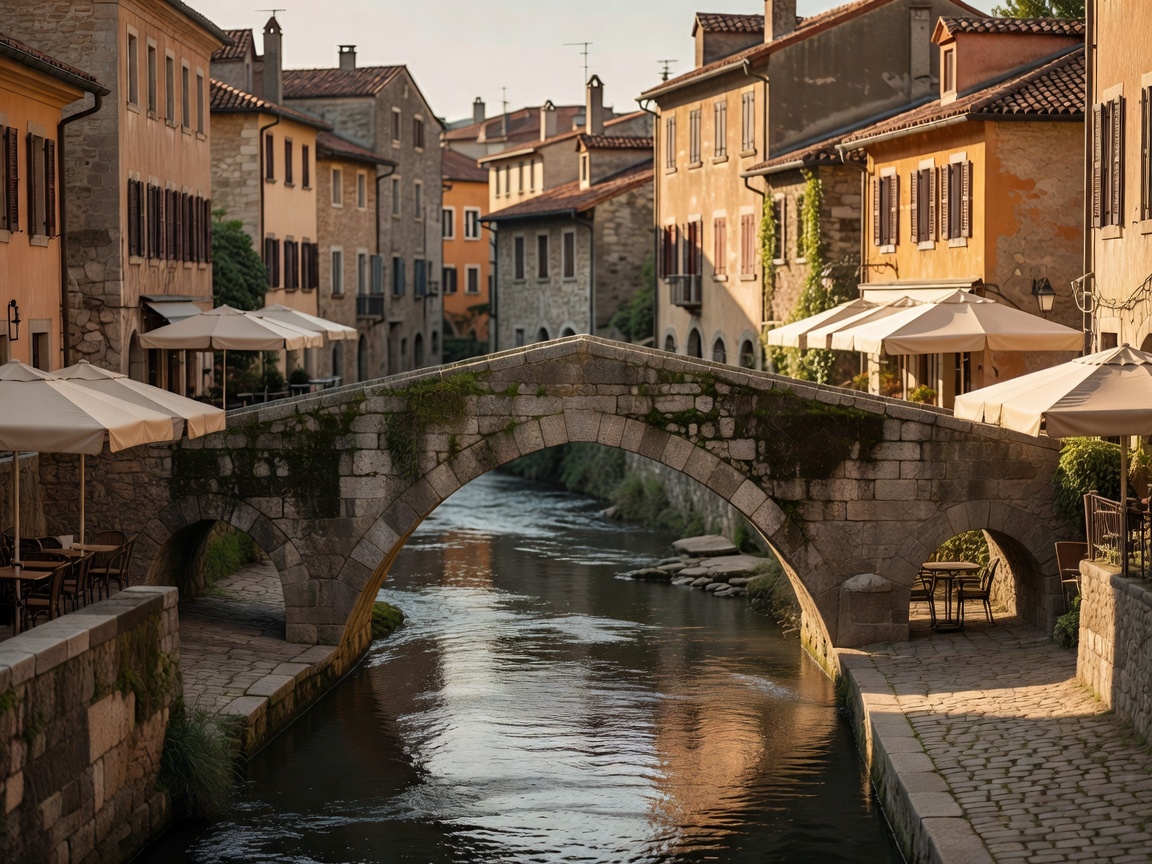
The castle has stood in some form since the 11th century, though what you climb today is largely 15th- and 16th-century with heavy modern intervention. Three ways up: the footpath from Študentovska ulica (12 minutes, steep but shaded), the path from Reber ulica (15 minutes, gentler), or the funicular from Krekov trg, which climbs 70 metres in about 60 seconds.
Inside, the paid sections include the Outlook Tower with its 92 steps, the Virtual Castle film, the Museum of Puppetry and the Slovenian History Exhibition. The courtyard, the Chapel of St George with its 60 painted coats of arms, and the ramparts walk are free. Go for the last hour of daylight: the Julian Alps show as a pale serrated line to the north-west and the old town roofs turn copper.
Markets, food halls and the Friday ritual
Plečnik's Central Market runs along the river between the Triple Bridge and the Dragon Bridge. The open-air stalls sell fruit, vegetables and flowers; the covered colonnade holds butchers, bakers and the famous "milk machine" dispensing raw milk. Behind it, the Pokrita tržnica indoor hall is the place for Karst prosciutto, Tolminc cheese and pumpkin seed oil.
From mid-March to late October, every Friday the market square hosts Odprta kuhna (Open Kitchen), where 40-plus Slovenian restaurants cook outdoors from 10:00 until 21:00. It is cancelled in heavy rain. Budget €8–€14 per dish and bring cash as a backup, though nearly all stalls now take cards.
If you have one evening only: walk the right bank from the Dragon Bridge to the Cobblers' Bridge, cross to Novi trg, and eat in a place with no English menu in the window. The tourist band is almost exactly 200 metres wide.
Green space and the Metelkova counterpoint
Tivoli Park begins two minutes west of Slovenska cesta and climbs into the Rožnik hills — 5 km² of chestnut avenues, greenhouse gardens and a modest zoo. The Jakopič Promenade running through it hosts large-format outdoor photography exhibitions year-round, free to walk past. From Tivoli you can carry on to Rožnik hill (394 m) in 30 minutes, a genuine forest walk with a tavern at the top.
At the other end of the city's personality is Metelkova Mesto, a former Yugoslav army barracks squatted in 1993 and now an autonomous cultural centre of galleries, murals and small music venues. By day it is a scruffy open-air art site; by night it is the loudest part of the city. It is safe but genuinely alternative — this is not a curated attraction.
Museums worth the entry fee
- National Gallery of Slovenia — Slovenian art from the Gothic to the early 20th century, including the Impressionists Jakopič and Grohar.
- Museum of Modern Art (Moderna galerija) — post-war and contemporary work, strong on the Neue Slowenische Kunst movement.
- National Museum of Slovenia — home of the Divje Babe flute, a 60,000-year-old perforated bear femur claimed as the world's oldest musical instrument.
- Plečnik House — the architect's own home in Trnovo, preserved almost exactly as he left it. Timed tickets, small groups.
Getting in and around
Ljubljana Jože Pučnik Airport (LJU) sits 26 km north near Brnik. Public bus 28 runs to the central bus station in roughly 50 minutes for a few euros; shared shuttle transfers cost around €10–€14 per person and take 30 minutes; a taxi is €40–€50. The railway and bus stations sit side by side a ten-minute walk north of Prešeren Square.
In the city you will not need transport. The LPP bus network uses the contactless Urbana card, and the free electric Kavalir carts circulate inside the pedestrian zone for anyone with limited mobility. Bike share (BicikeLJ) has stations across the centre. Driving into the old town is not possible — use the Kongresni trg or NUK II underground car parks and walk.
Day trips from the capital
Ljubljana works as a base for a surprising amount. Lake Bled is 45 minutes by car or roughly 80 minutes by bus. The Škocjan Caves are 55 minutes down the A1. Predjama Castle and Postojna are an hour. The Ljubljana Marshes (Ljubljansko barje), a Ramsar wetland with prehistoric pile-dwelling sites, start at the southern edge of the city and make an excellent flat cycle.