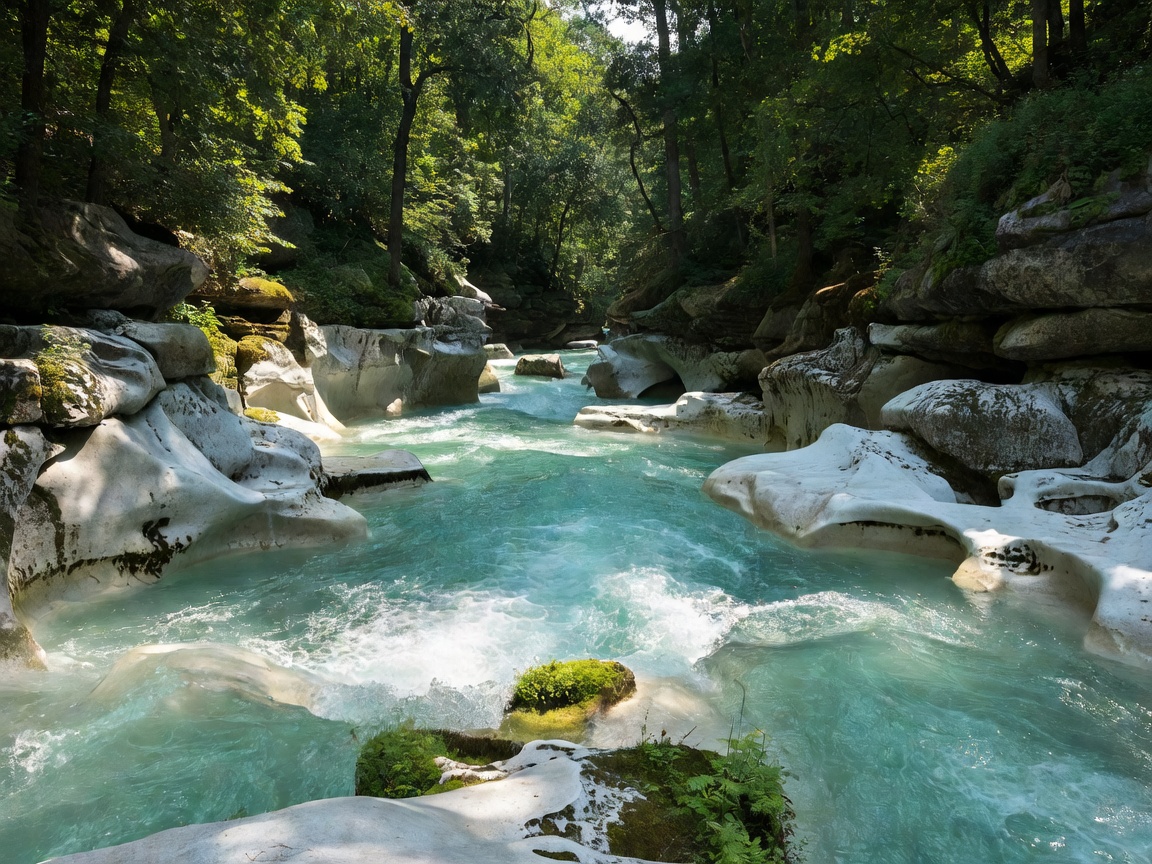
The Soča's colour is not a filter. Fine limestone particles suspended in the water scatter light toward the green end of the spectrum, producing a shade that locals simply call smaragdna — emerald. The river rises under Mount Travnik in the Trenta valley and runs south-west into Italy, where it becomes the Isonzo. Along the way it carves gorges, fills pools, and gives this corner of Slovenia its entire identity.
Bovec: the activity capital
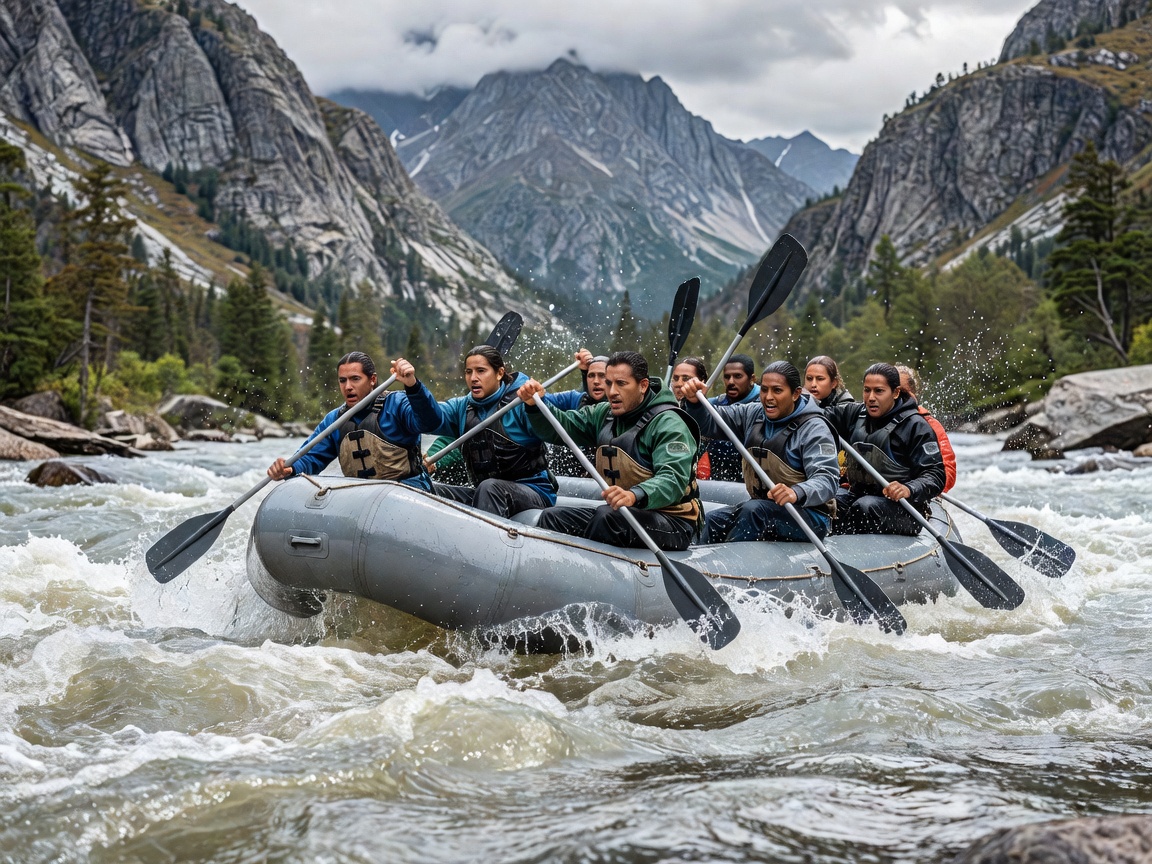
Bovec sits at 483 m in a broad basin ringed by Kanin (2,587 m) and the Julian Alps. It is the base for whitewater: rafting on the Soča runs roughly grade II–IV depending on the section and water level, kayaking is world-class, and canyoning in the Sušec and Fratarica gorges is excellent. The season runs from April, when snowmelt makes the river fast and cold, to September.
Above the town, the Kanin cable car climbs to 2,202 m — the highest in Slovenia — with a view across to the Adriatic on clear days. The Boka Waterfall, visible from the main road 5 km west of town, plunges 106 metres in a single drop; the roadside viewpoint costs nothing, the steep 30-minute climb to the base is worth it in spring.
Kobarid: history and gastronomy
Kobarid is a village of about a thousand people with two disproportionate claims to fame. The first is the Kobarid Museum, widely considered one of the finest war museums in Europe, telling the story of the Isonzo Front — twelve battles between 1915 and 1917 in which an estimated 300,000 men died in these mountains. The 1917 Battle of Caporetto, the Austro-German breakthrough that broke the Italian line, gives the museum its subject and Hemingway's A Farewell to Arms its setting.
The second claim is food. For a village this size, Kobarid has an extraordinary concentration of serious kitchens working with Soča trout, Tolminc cheese, Karst prosciutto and Kobariški štruklji — walnut dumplings served warm with breadcrumbs.
The Kobarid Historical Trail is a 5 km loop taking around three hours: it climbs past the Italian charnel house, visits WWI trench positions on Gradič hill, crosses the Napoleon Bridge high above the river, and passes the 15 m Kozjak Waterfall, which falls into a circular chamber of sculpted rock — the single most photogenic waterfall in the country.
Tolmin and its gorges
Tolmin is the valley's largest town and the gateway to the Tolmin Gorges, the lowest entry point into Triglav National Park at 180 m. The circuit takes 1.5–2 hours and includes the confluence of the Tolminka and Zadlaščica rivers, a thermal spring, the Bear's Head boulder wedged between the gorge walls, and the vertiginous Devil's Bridge 60 metres above the water. It closes in winter and after heavy rain.
Drive the valley road from Bovec to Tolmin slowly. There are more than a dozen unmarked pull-ins where you can scramble down to the water, and the best of them are not in any guidebook.
The Vršič Pass
The road from Kranjska Gora over Vršič into the Trenta valley is the most spectacular drive in Slovenia. Built by Russian prisoners of war in 1915 to supply the Isonzo Front, it climbs to 1,611 m over 50 numbered hairpin bends — 24 on the northern side, 26 on the southern — with 24 of them still surfaced in the original cobblestones.
At hairpin 8 on the north side stands the Russian Chapel, built by surviving prisoners in memory of the several hundred men killed by an avalanche in March 1916. It is a small wooden church in the forest and it is worth stopping for.
Seasonality matters. The pass typically opens in late April or May and closes with the first serious snow, usually November. It can shut at any time in winter and requires winter equipment in shoulder season. Allow at least 90 minutes for the 50 km Kranjska Gora–Trenta section with stops; motorhomes and nervous drivers should expect it to take longer.
On the southern descent, stop at the Source of the Soča in Trenta: a 15-minute walk, partly secured with steel cable, to where the river emerges from a cave in a dark green pool. It is properly cold, properly loud, and only a hundred metres from the road.
The Great Soča Gorge
Between Bovec and Trenta, the river narrows into the Velika korita — the Great Soča Gorge — a 750 m slot up to 15 m deep and barely a couple of metres wide in places. A suspension footbridge crosses it near the Lepena turnoff, and a marked path runs along the rim. Swimming here is for the experienced only: the water runs at 8–12 °C even in August and the current in the narrows is serious.
Practicalities
Bovec is 72 km from Bled over Vršič (2 hours) or 105 km via the Predel Pass and Italy (1 h 50, open year-round). From Ljubljana, Bovec is 145 km via Idrija and Tolmin, around 2 h 30. Buses serve the valley from Ljubljana and Kranjska Gora but are infrequent — a car is strongly recommended.
Accommodation is mainly apartments, farmhouse rooms and small hotels; book well ahead for July, August and the weekend of the Tolmin festivals. Fuel up in Bovec or Tolmin: there are long stretches with no station, and none at all on the pass.